How do I create and use a risk and resilience profile for my city?

Preparing for and responding to disaster events involves partnerships and collaboration, including with the residents of vulnerable settlements. It also involves having access to relevant information about an area affected by a hazard so that responses and support can be appropriately tailored to meet specific needs. In this regard, a ‘risk and resilience’ profile that provides information on critical risks in a settlement and measures that are already in place to prepare for and respond to such events, can be extremely helpful to municipal officials, disaster management teams, NGOs, other organisations offering assistance, and community leaders. 

The profile template that has been developed is intended to provide a guide for recording the information that is most relevant in informing decision-making and actions before, during and after disaster events. It merges settlement-specific details with operational response plans, to help facilitate more informed decision-making and action during flooding and other disasters.

The information fields have emerged from research findings and participatory engagements with government officials, informal settlement communities and other stakeholders during the INACCT Resilience Project.

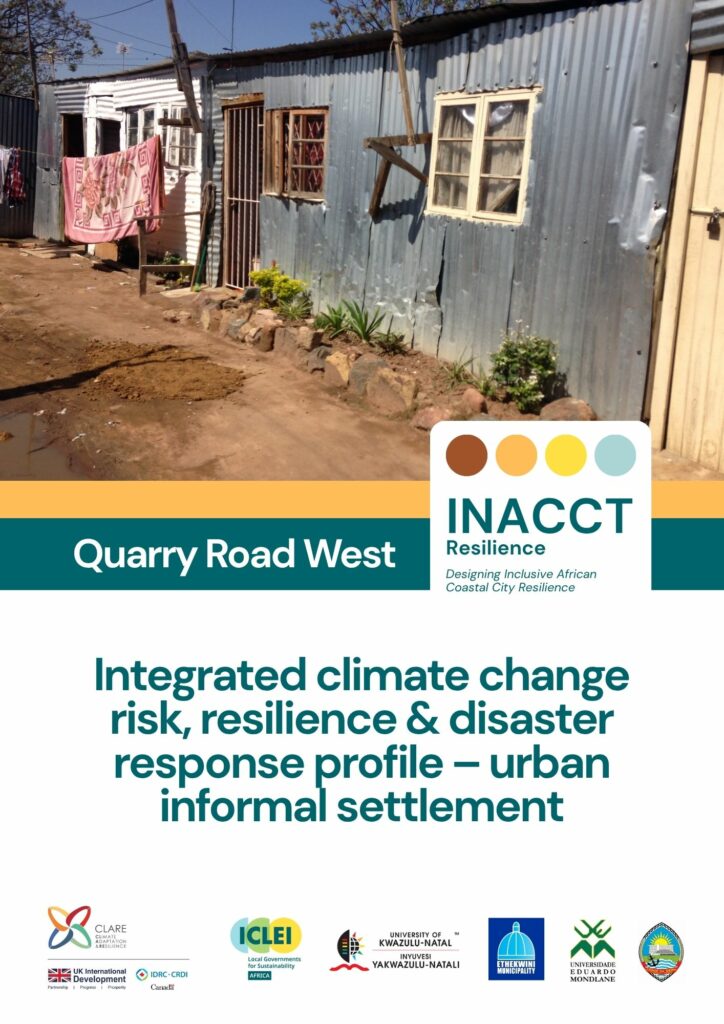
Quarry Road West settlement profile

This document is an integrated climate change risk, resilience & disaster response profile for this Durban-based urban informal settlement.

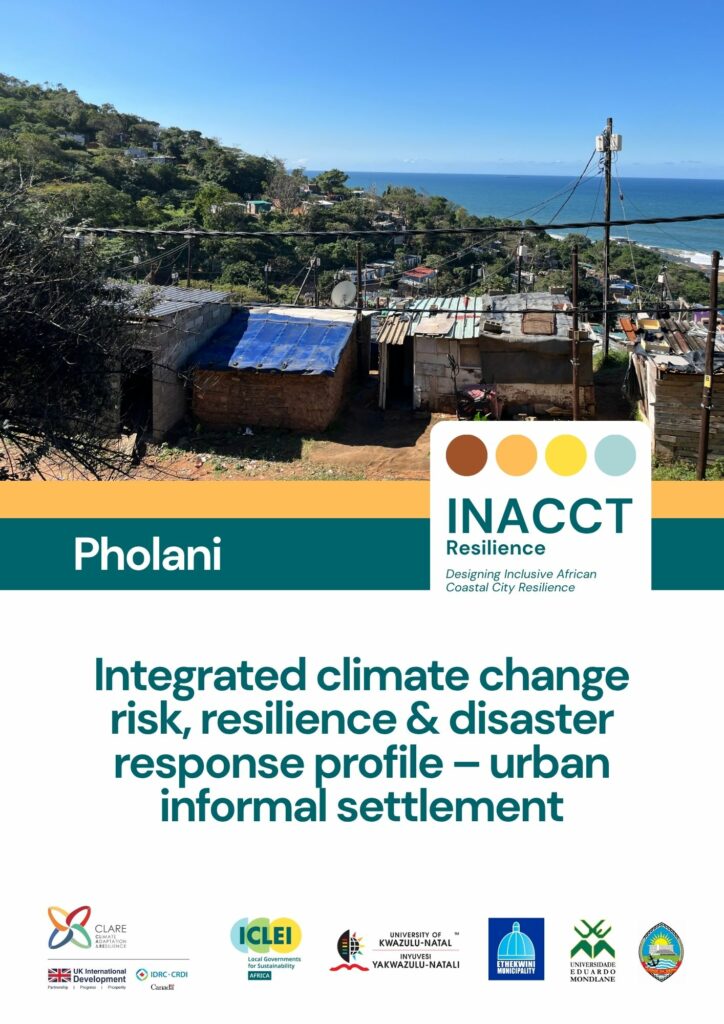
Pholani settlement profile

This document is an integrated climate change risk, resilience & disaster response profile for this Durban-based urban informal settlement.

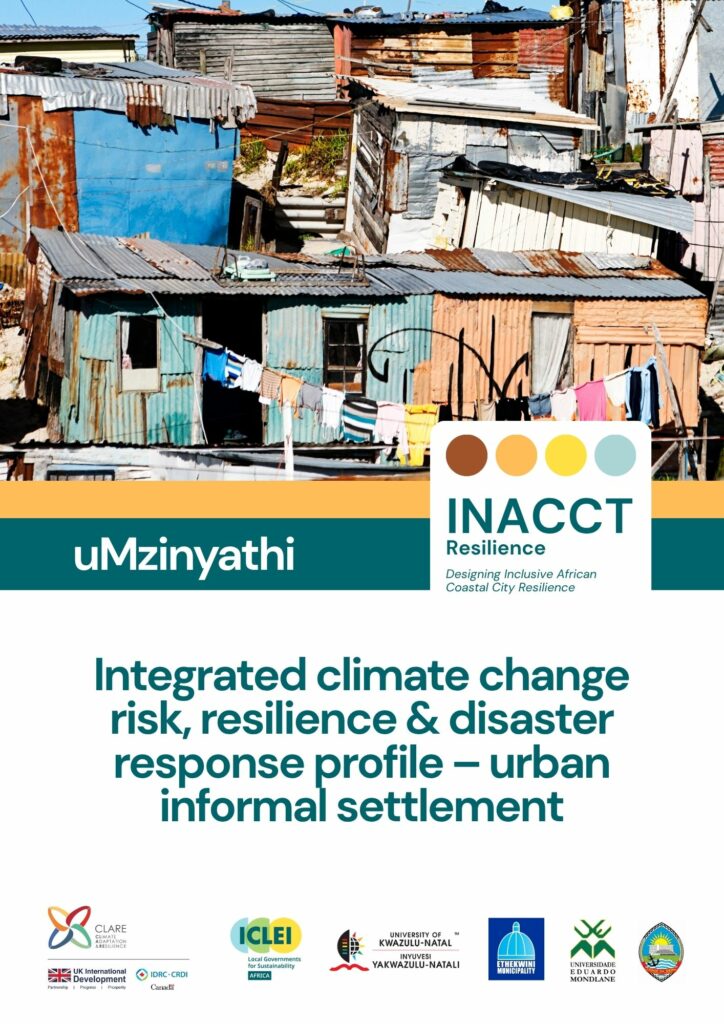
uMzinyathi settlement profile

This document is an integrated climate change risk, resilience & disaster response profile for this Durban-based urban informal settlement.

Tshelimnya settlement profile

This document is an integrated climate change risk, resilience & disaster response profile for this Durban-based urban informal settlement.

Alto da Manga settement profile (English)

This document is an integrated climate change risk, resilience & disaster response profile for this Beira-based urban informal settlement.

Alto da Manga settlement profile (Portuguese)

This document is an integrated climate change risk, resilience & disaster response profile for this Beira-based urban informal settlement.

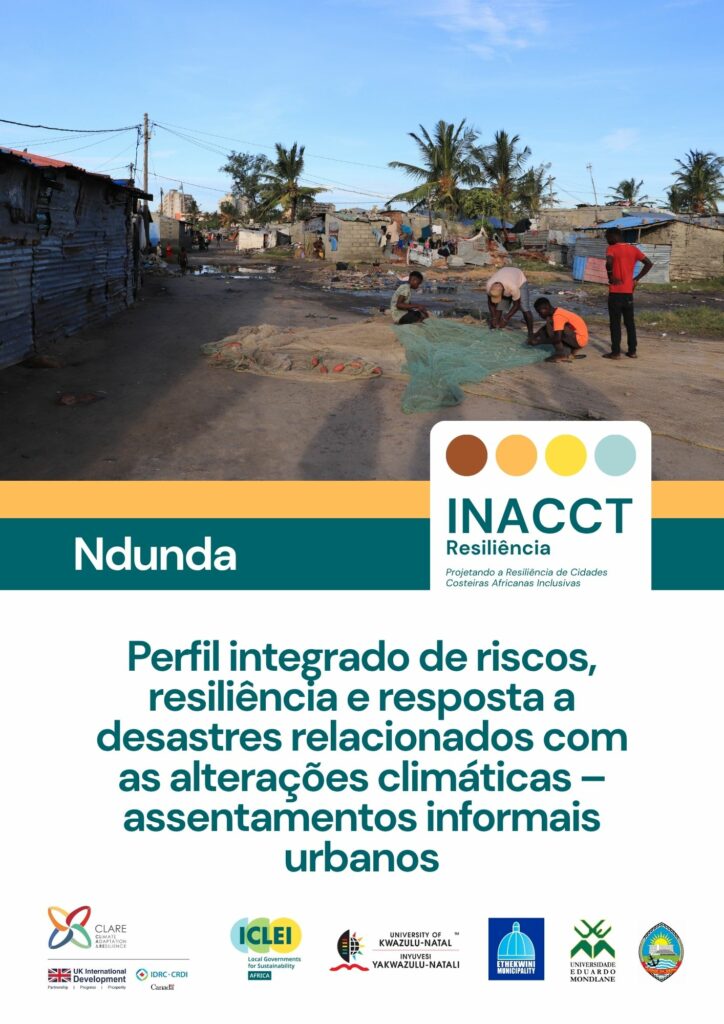
Ndunda settlement profile (English)

This document is an integrated climate change risk, resilience & disaster response profile for this Beira-based urban informal settlement.

Ndunda settlement profile (Portuguese)

This document is an integrated climate change risk, resilience & disaster response profile for this Beira-based urban informal settlement.

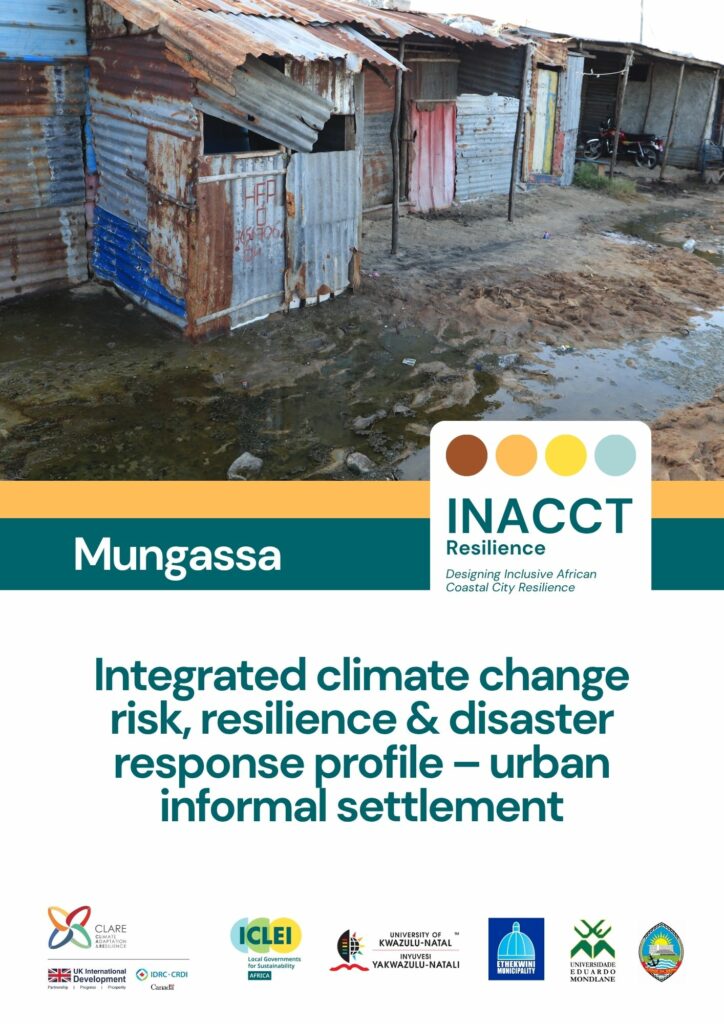
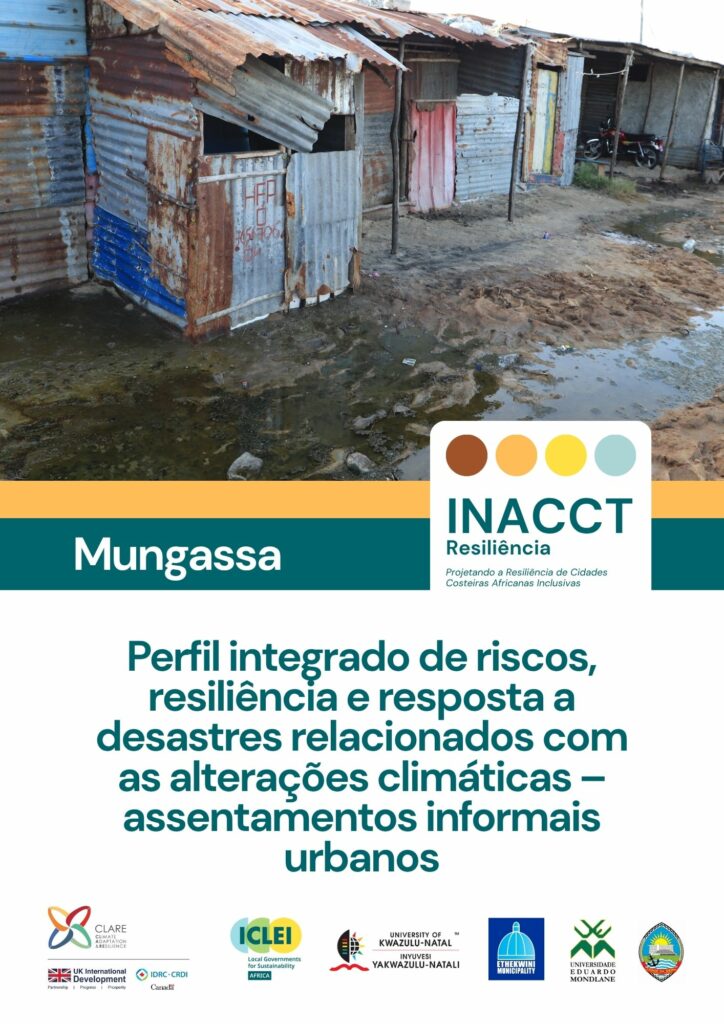
Mungassa settement profile (English)

This document is an integrated climate change risk, resilience & disaster response profile for this Beira-based urban informal settlement.

Mungassa settlement profile (Portuguese)

This document is an integrated climate change risk, resilience & disaster response profile for this Beira-based urban informal settlement.

Settlement profile posters for Durban

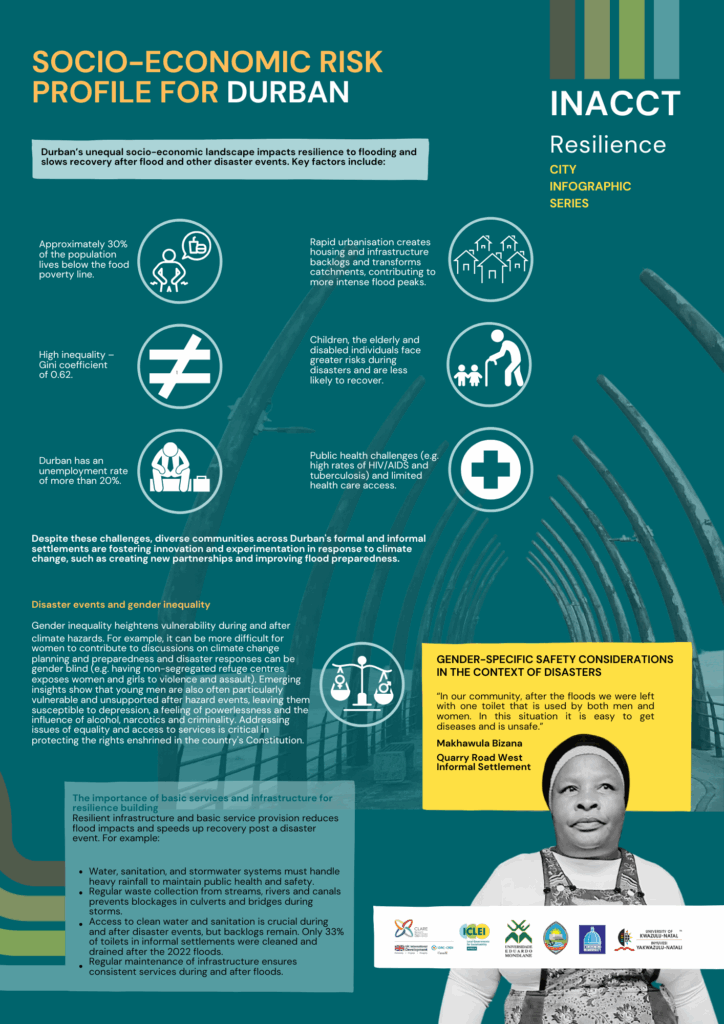
Socio-economic risk profile for Durban

This infographic shares how the socioeconomic landscape in Durban affects resilience planning.

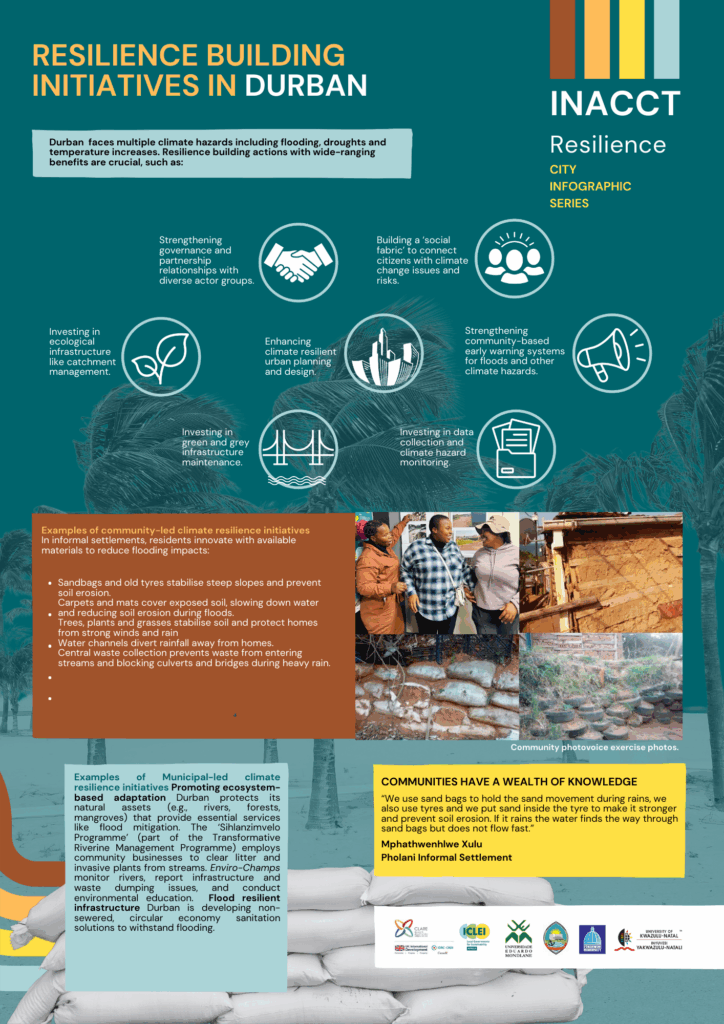
Resilience initiatives in Durban

This infographic shares what climate hazards and solutions can be found in this South African city.

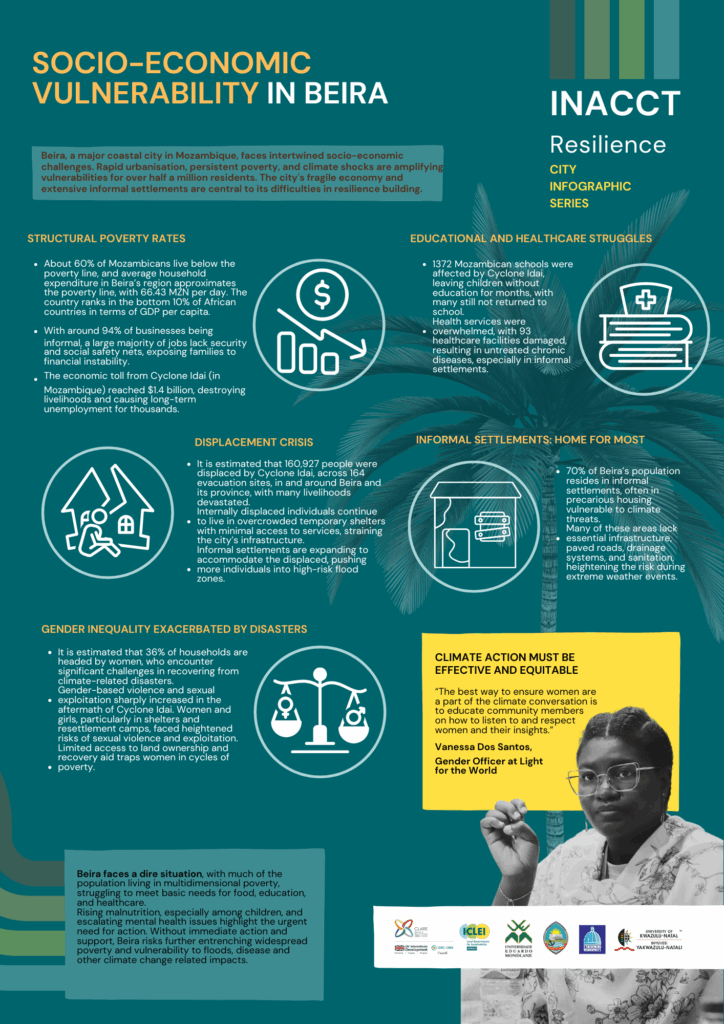
Socio-economic vulnerability in Beira

This infographic speaks to how socio-economic factors impact resilience in this Mozambican coastal city.

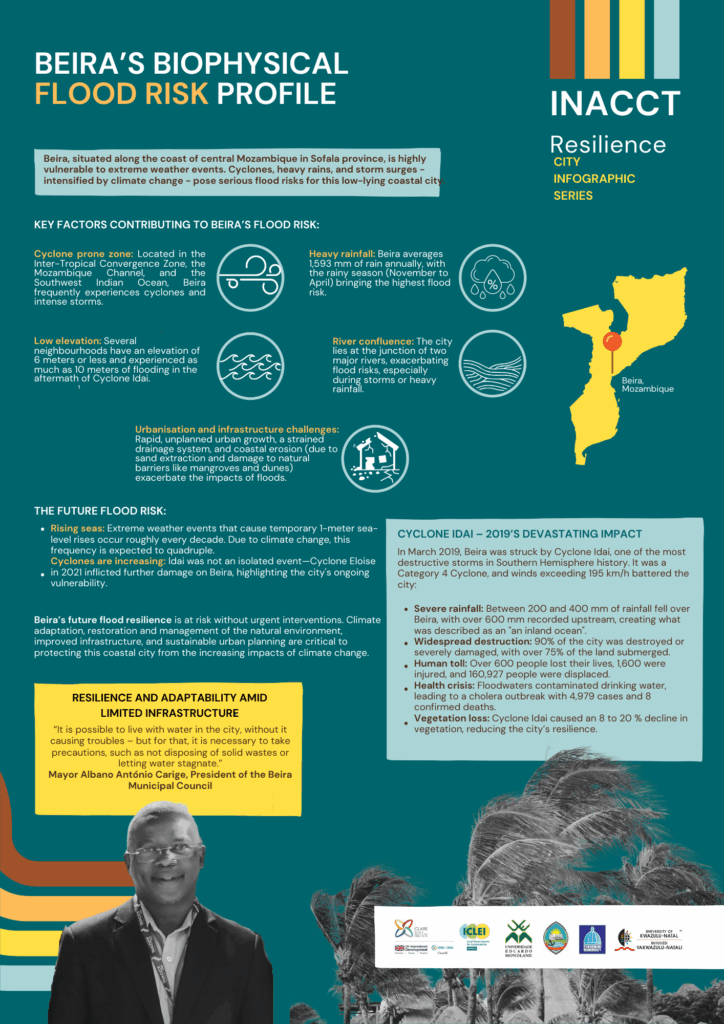
Beira’s biophysical flood risk profile

This infographic outlines this coastal city’s biggest challenges when it comes to flooding.

CLARE is a flagship research programme on climate adaptation and resilience, funded mostly (about 90%) by UK Aid through the Foreign Commonwealth and Development Office (FCDO), and co-funded by the International Development Research Centre (IDRC), Canada. CLARE is bridging critical gaps between science and action by championing Southern leadership to enable socially inclusive and sustainable action to build resilience to climate change and natural hazards. The views expressed herein do not necessarily represent those of the UK government, IDRC or its Board of Governors. Learn more about CLARE:
www.clareprogramme.org