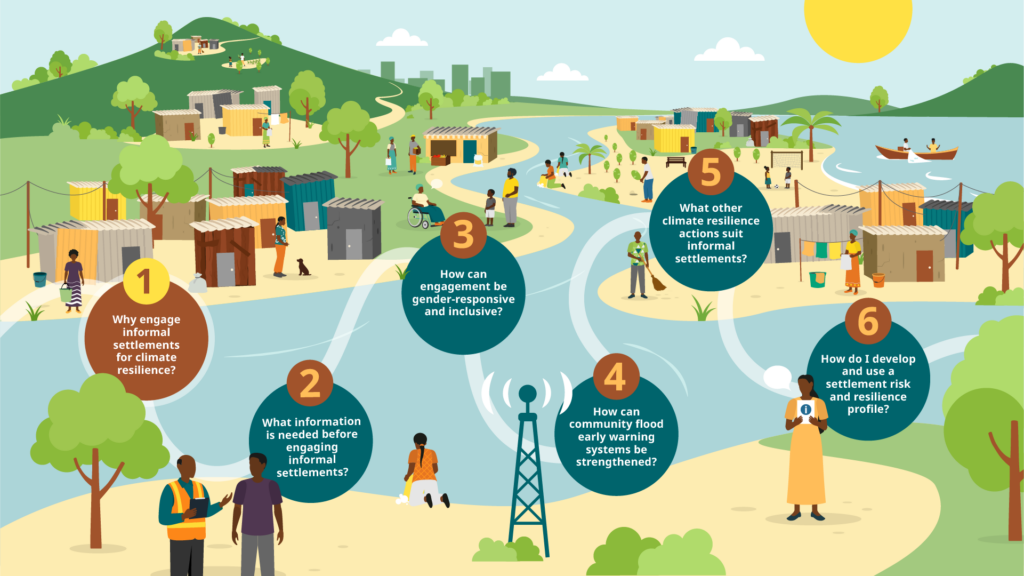
Why is it important for local government to engage with informal settlements to build climate resilience?
As urbanisation accelerates, informal settlements are becoming an increasingly common feature of cities worldwide, particularly in low- and middle-income countries. These areas are among the most exposed and sensitive to climate-related risks, including flooding, extreme heat, and service disruptions. Often located in environmentally vulnerable parts of cities, informal settlements face heightened risks due to limited infrastructure, insecure land tenure, and restricted access to basic services and decision-making processes.
At the same time, informal settlements are places of strong social networks, deep local knowledge, and everyday innovation. Urban resilience cannot be achieved by focusing solely on the formal city; it must be inclusive, locally grounded, and shaped by lived realities. Strengthening climate resilience in informal settlements is therefore essential for cities responding to increasing climate impacts.
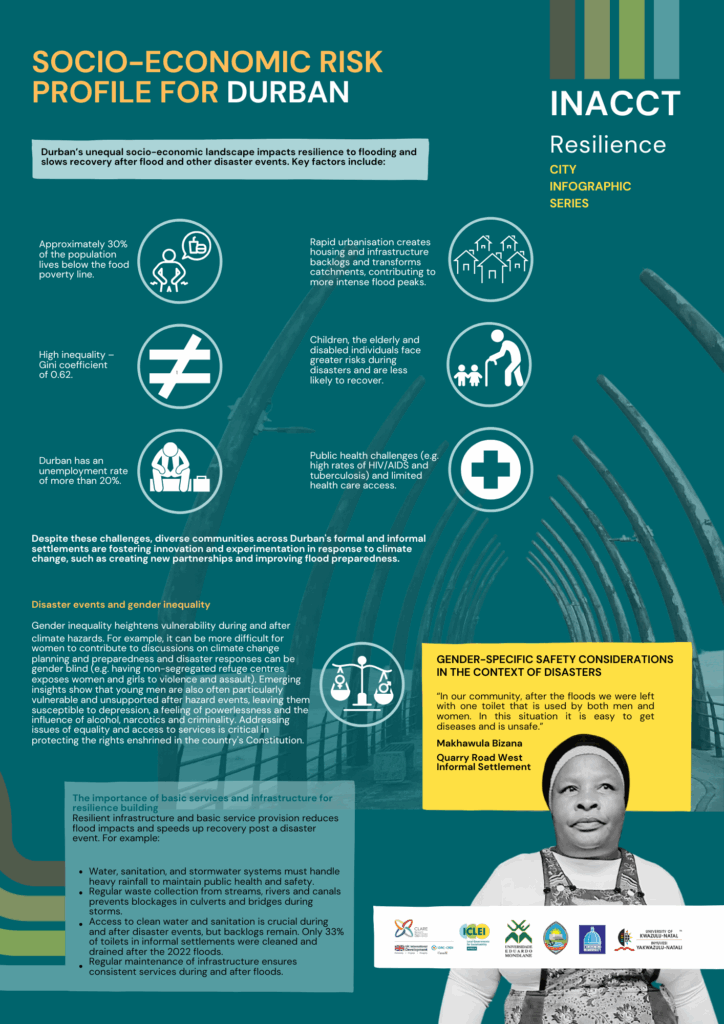
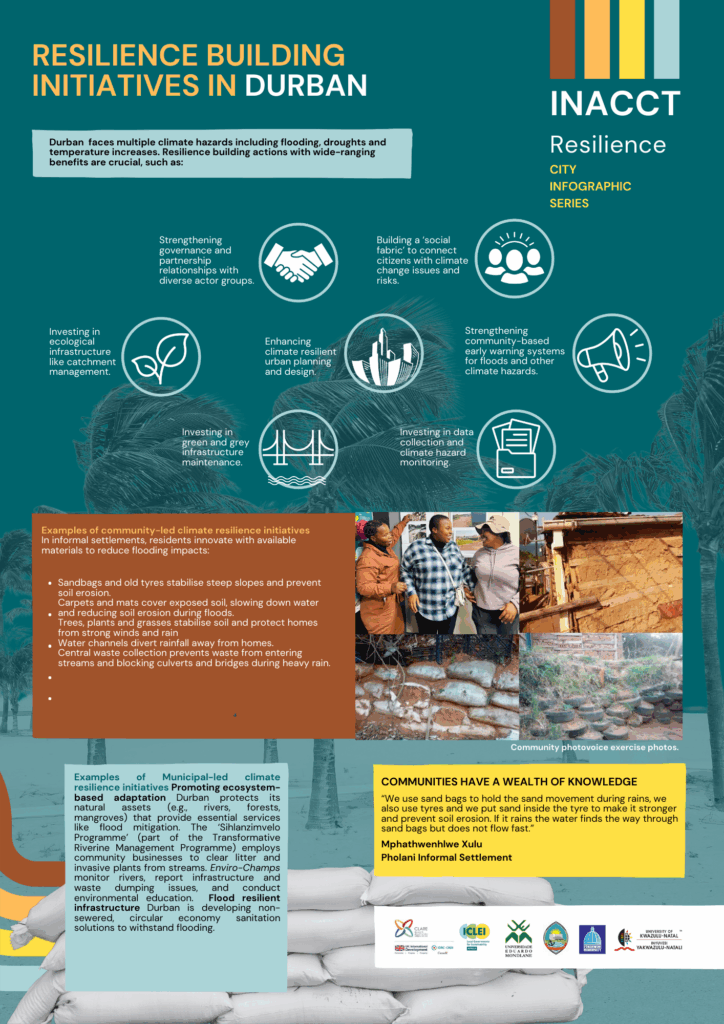
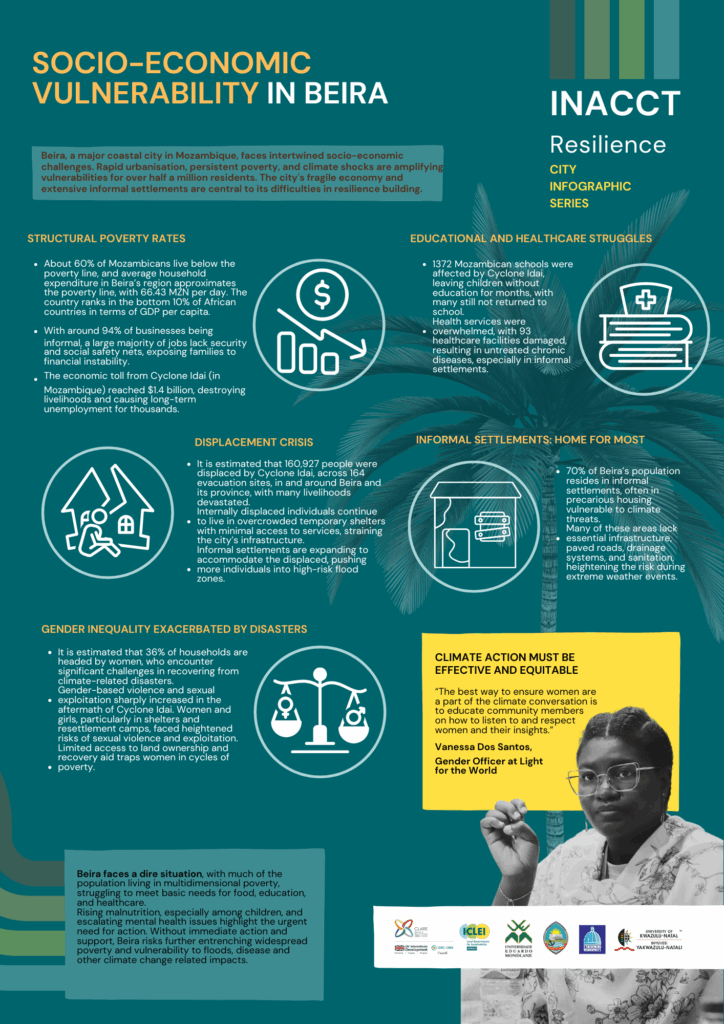
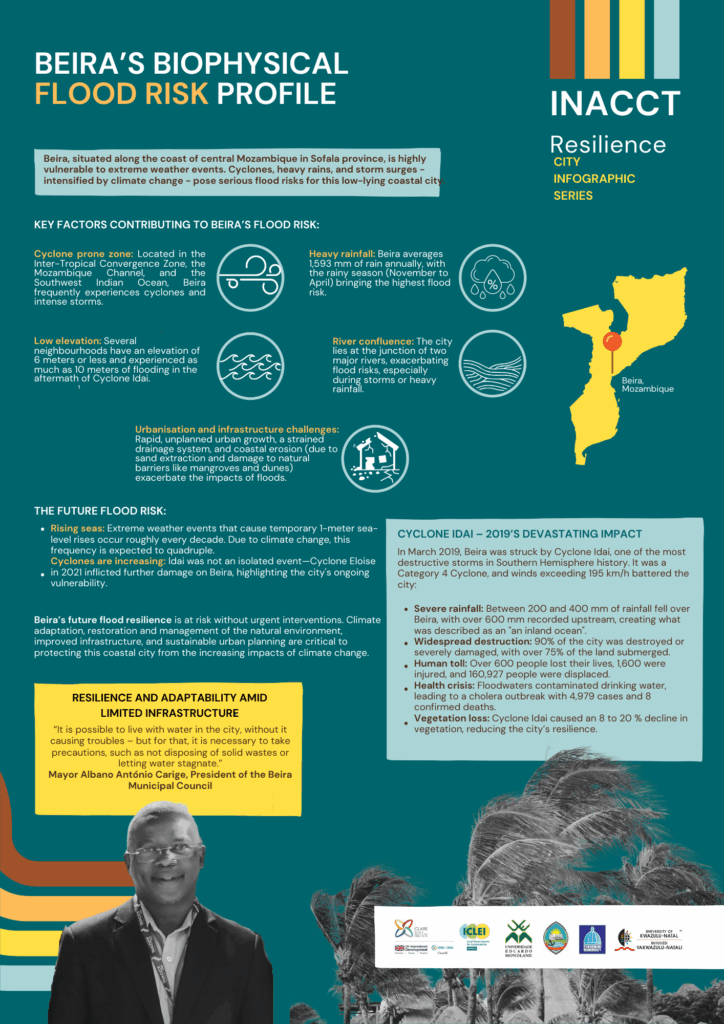
Through the INACCT Resilience Project, collaboration with communities in Durban and Beira has demonstrated that co-produced approaches such as community-based early warning systems, local risk profiling, and nature-based solutions can reduce risk, strengthen relationships between communities and local authorities, and support more just and effective pathways for urban adaptation. Investing in resilience in informal settlements ultimately strengthens the resilience of the city as a whole.
Informal settlements face some of the highest climate risks in cities, yet are often excluded from planning and investment. Building resilience through locally grounded, co-produced solutions reduces risk, strengthens communities, and supports safer, more resilient cities for all.
Durban’s CBFEWS
This document consolidates Durban’s existing CBFEWS experience in the Palmiet Catchment and shares reflections on what this experience means for upscaling CBFEWS in other locations
This document shares the approach Durban adopted to test CBFEWS upscaling in additional settlements in Durban and documents the outcomes and learnings.
Learnings and recommendations for upscaling CBFEWS
This document consolidates the CBFEWS experiences to date across Durban and Beira, and provides practical guidelines and recommendations on how to upscale CBFEWS in other areas.
CLARE is a £110m, UK-Canada framework research programme on Climate Adaptation and Resilience, aiming to enable socially inclusive and sustainable action to build resilience to climate change and natural hazards. CLARE is an initiative jointly designed, funded and run by the UK Foreign Commonwealth and Development Office and Canada’s International Development Research Centre. CLARE is primarily funded by UK aid from the UK government, along with the International Development Research Centre, Canada.