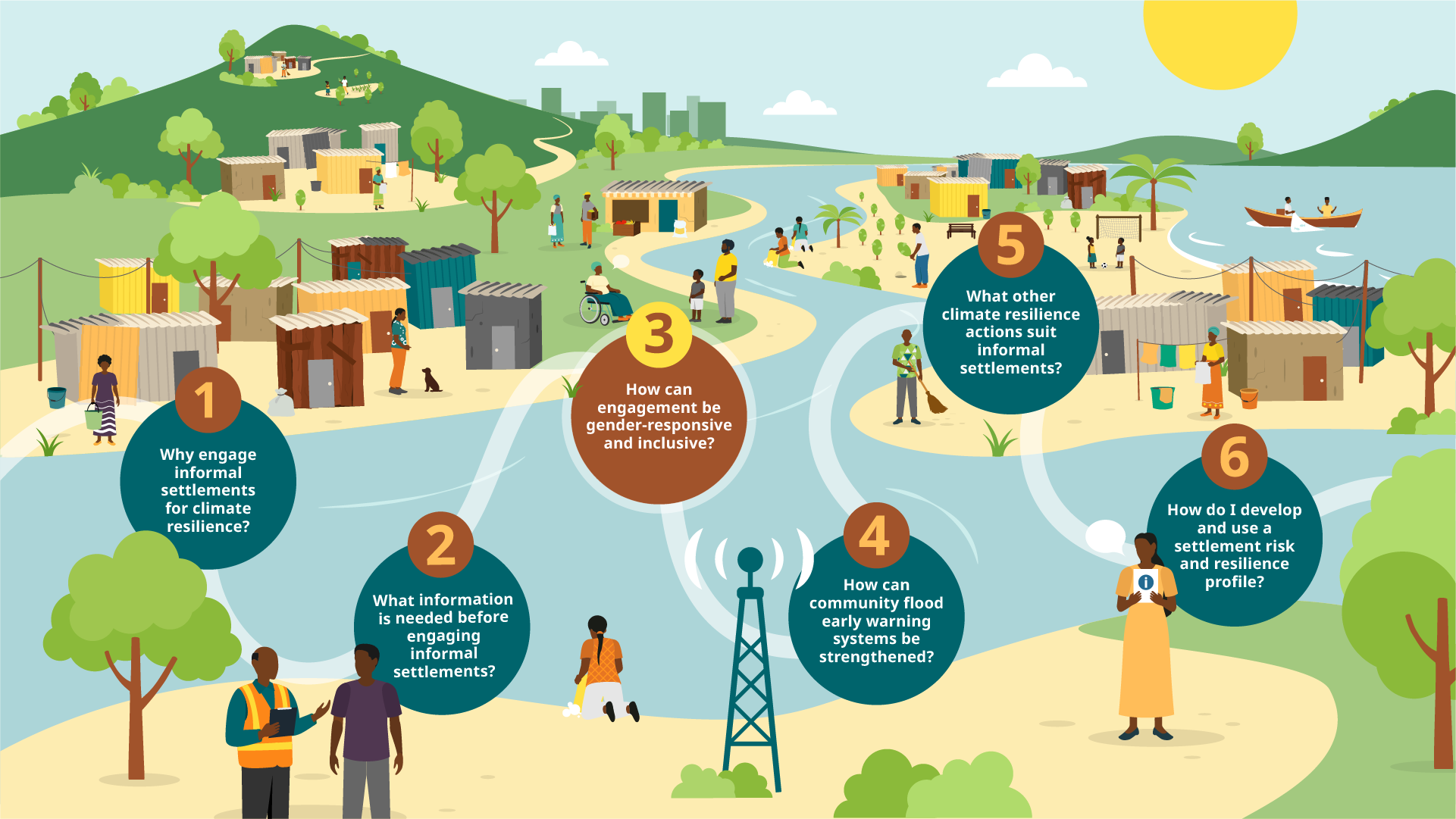
How do I engage (and co-produce knowledge?) in ways that are gender-responsive and inclusive?
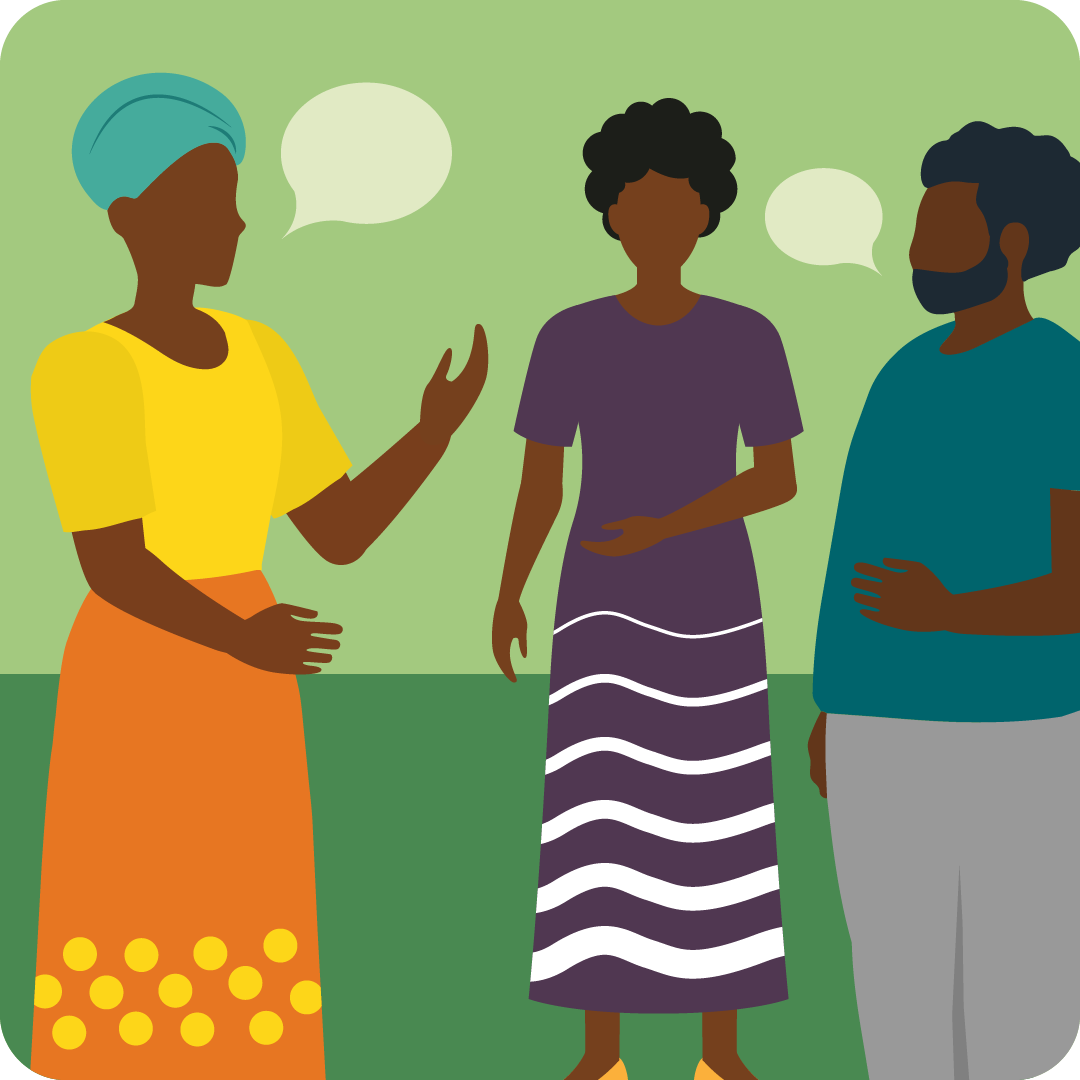
Gender-responsive and inclusive engagement recognises that climate risks, impacts, and capacities are experienced differently across gender, age, ability, livelihood, and social position. Effective co-production therefore requires creating spaces and processes where diverse voices—including women, youth, older persons, people with disabilities, migrants, and informal workers—can participate meaningfully and safely.
The INACCT Resilience Project has shown that this begins with a clear understanding of local social dynamics and power relations, alongside the deliberate design of engagement processes that reduce barriers to participation. These barriers may include the timing and location of meetings, language, childcare responsibilities, mobility constraints, and cultural norms. Using participatory and creative methods—such as small-group discussions, visual tools, storytelling, and hands-on approaches like playdough modelling—supports shared learning between communities, researchers, and local authorities.
Gender-responsive engagement also involves recognising, valuing, and integrating different forms of knowledge, including lived experience and everyday adaptation practices. It ensures that insights generated through co-production meaningfully inform decision-making, planning, and action. By embedding inclusivity and gender responsiveness throughout the process, co-produced knowledge becomes more effective in supporting equitable and just climate resilience outcomes.
Inclusive and gender-responsive engagement creates space for diverse voices and knowledge. INACCT shows that co-production is most effective when power dynamics are acknowledged and barriers to participation are actively addressed.
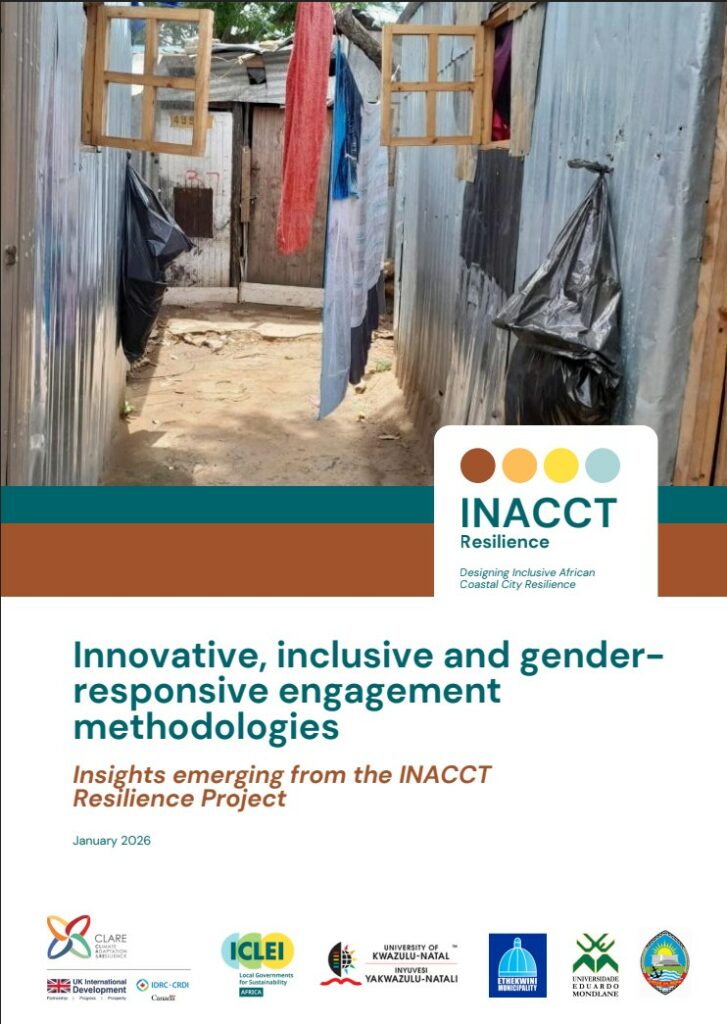
Innovative, inclusive and gender-responsive engagement methodologies
Methodology-related insights from the INACCT Resilience project.
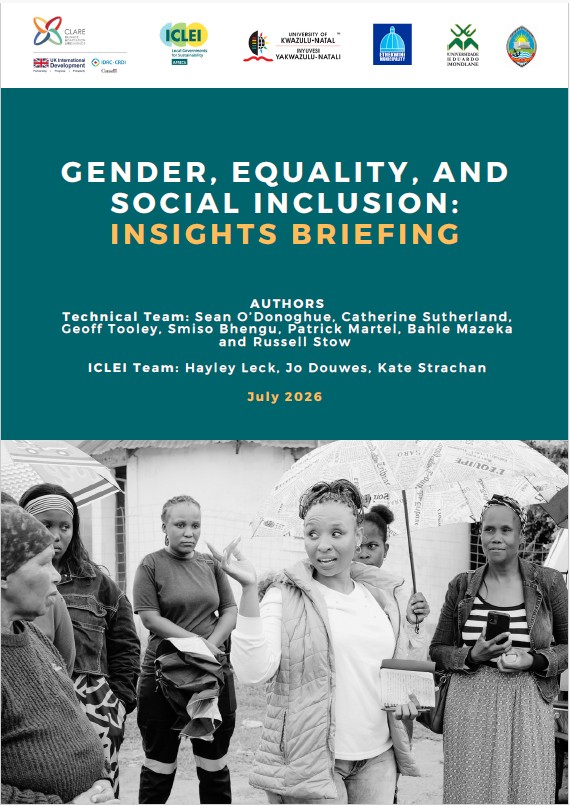
Gender, equality and social inclusion insights briefing
This insight briefing explores the conceptual underpinnings, methodologies, and emerging lessons relating to socially inclusive and gender-responsive approaches as adopted under the INACCT project.
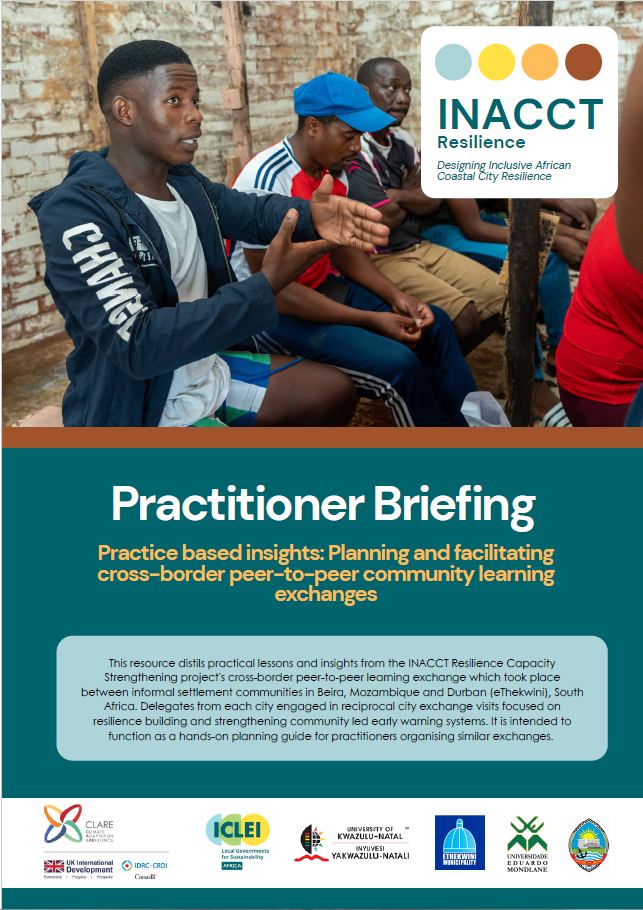
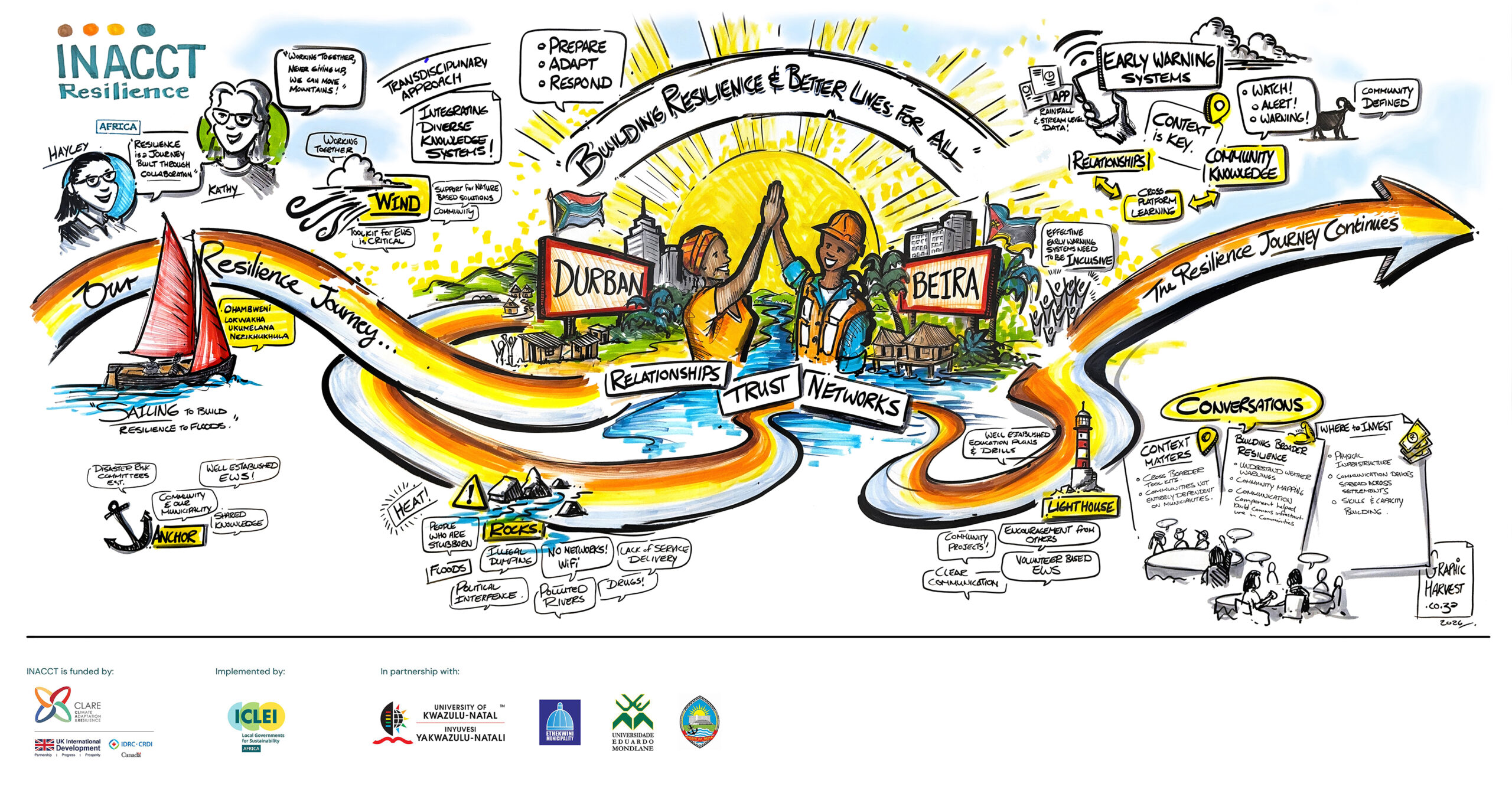
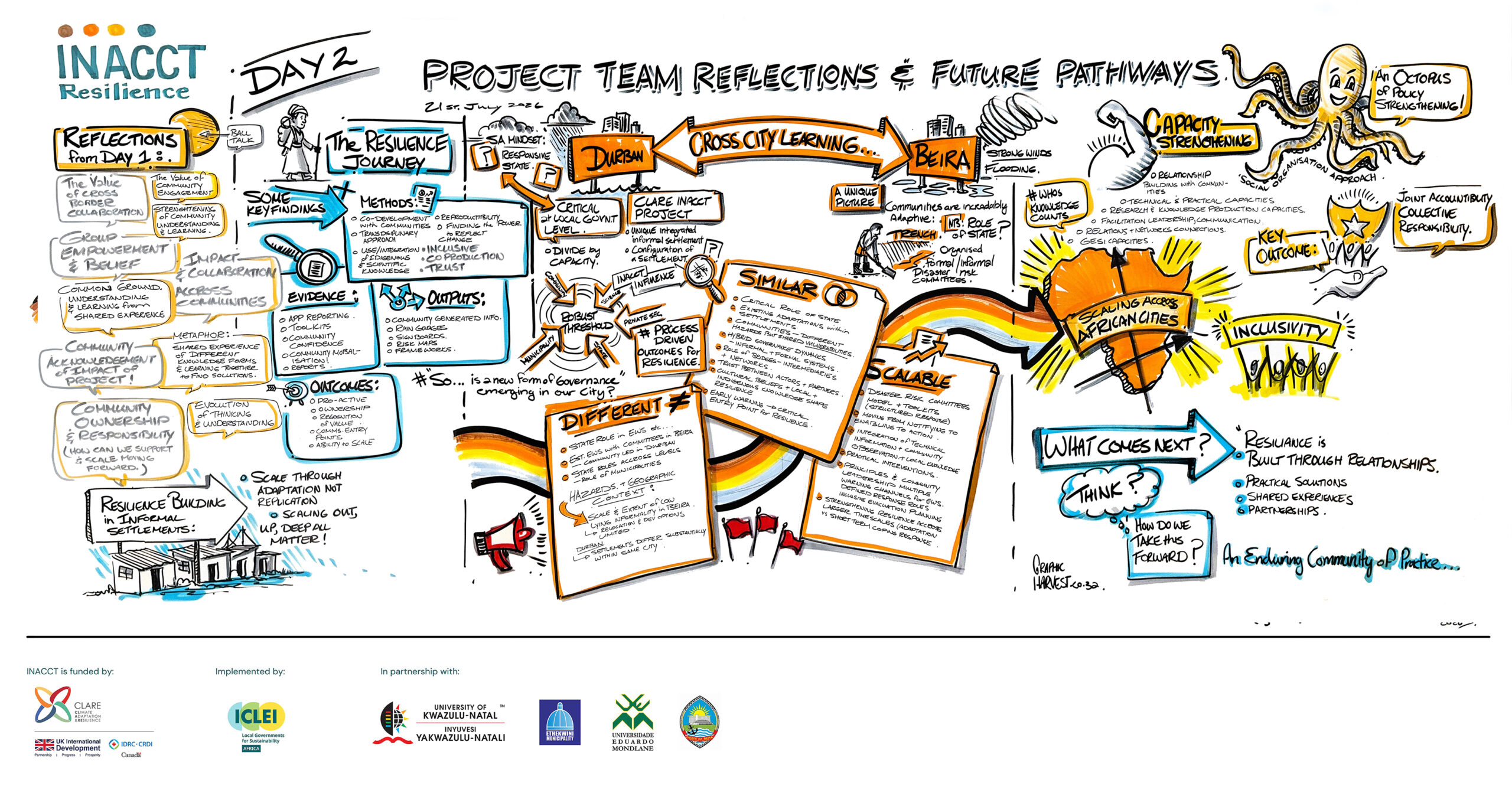
This practitioner briefing distils practical lessons from a cross-border peer-to-peer learning exchange between informal settlement communities in Beira, Mozambique, and Durban, South Africa. It provides a hands-on guide for practitioners planning similar community learning exchanges focused on resilience and community-led early warning systems.
An innovative, multi-modal and accessible approach to resilience research has been central to co-developing actionable strategies that prioritise gender-responsiveness and social inclusion. These approaches are outlined in the Innovative, Inclusive and Gender-Responsive Engagement Methodologies document.
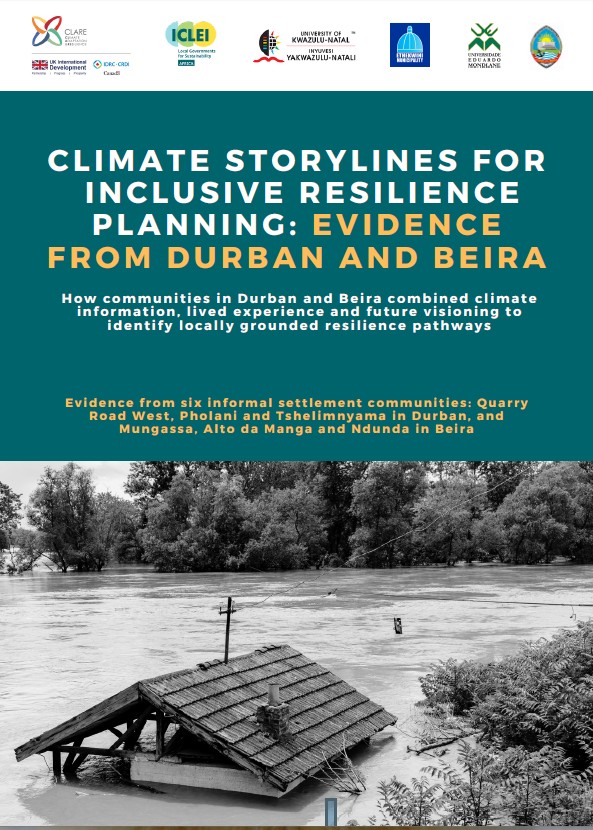
Climate Storylines, also referred to in the project as climate risk narratives or physical climate storylines, are used to connect scientific information with lived experience and future-oriented decision-making.
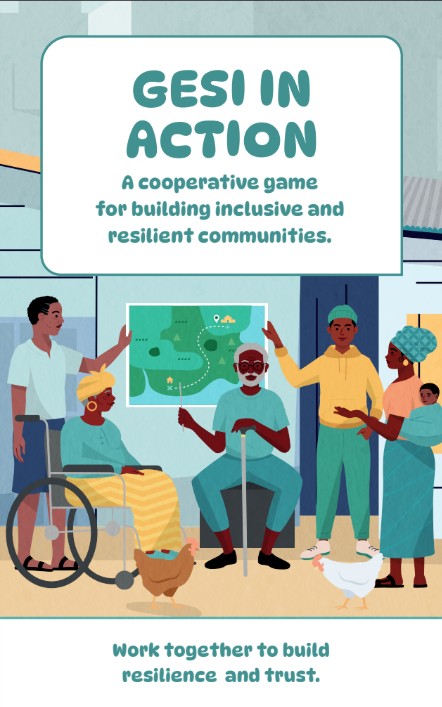
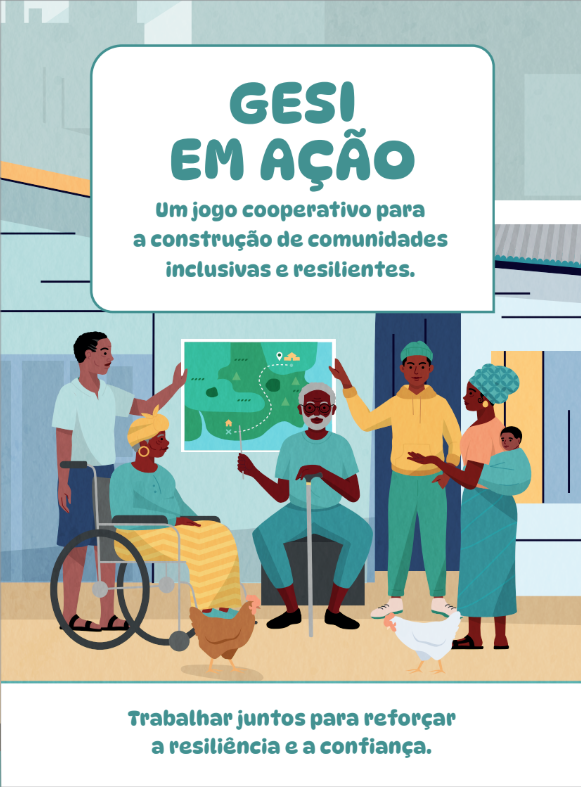
This interactive board game is ideal for workshops or training, enabling community members to work together to explore and conceptualise inclusive decisions for climate resilience planning.
Jogo de tabuleiro e jogo de cartas GESI (português)
Este jogo de tabuleiro interativo é ideal para oficinas ou treinamentos, permitindo que membros da comunidade trabalhem juntos para explorar e conceituar decisões inclusivas voltadas ao planejamento da resiliência climática.
CLARE is a flagship research programme on climate adaptation and resilience, funded mostly (about 90%) by UK Aid through the Foreign Commonwealth and Development Office (FCDO), and co-funded by the International Development Research Centre (IDRC), Canada. CLARE is bridging critical gaps between science and action by championing Southern leadership to enable socially inclusive and sustainable action to build resilience to climate change and natural hazards. The views expressed herein do not necessarily represent those of the UK government, IDRC or its Board of Governors. Learn more about CLARE: www.clareprogramme.org