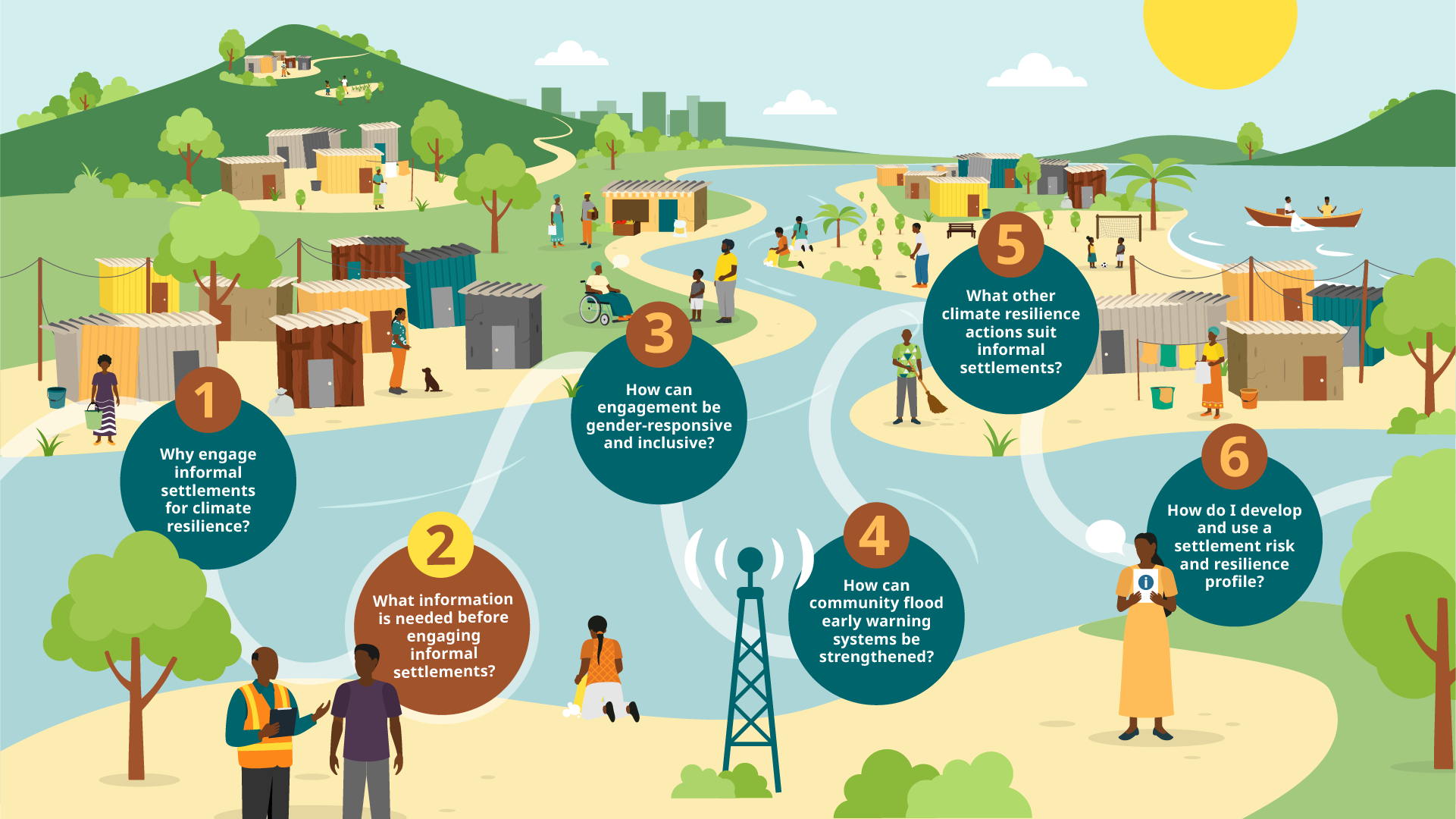
How can we build a shared understanding of local risks, capacities and priorities with informal settlement communities?
Effective climate resilience building starts with relationships and a shared understanding of place. For INACCT, this understanding was co-produced with communities through an ongoing iterative and inclusive process of engagement, research and learning. Reviewing existing information can help prepare for initial engagement, while residents’ knowledge, experiences and priorities shape the questions asked, how risks are understood and which responses are appropriate. This involves jointly exploring climate hazards—such as flooding —who and what is exposed, and how physical conditions, livelihoods, gender dynamics and access to services shape vulnerability and the ability to respond. It also means recognising existing community capacities, local practices, social networks and institutional relationships. Bringing community, scientific and practitioner knowledge together helps identify gaps, examine differences within the settlement and agree priorities for action, with this understanding revisited as learning develops and conditions change.
Building climate resilience starts with understanding local risks, social dynamics, and governance contexts. INACCT demonstrates that grounding action in community knowledge and lived experience leads to more effective and inclusive resilience outcomes.
Below are informative videos you can share widely within your community, on what to do before, during and after flooding. The video is available in English, Portuguese, and Zulu.
Playlist
0:16
0:16
0:16
Resilience Building For Climate Change And Flooding In Informal Settlements (English)
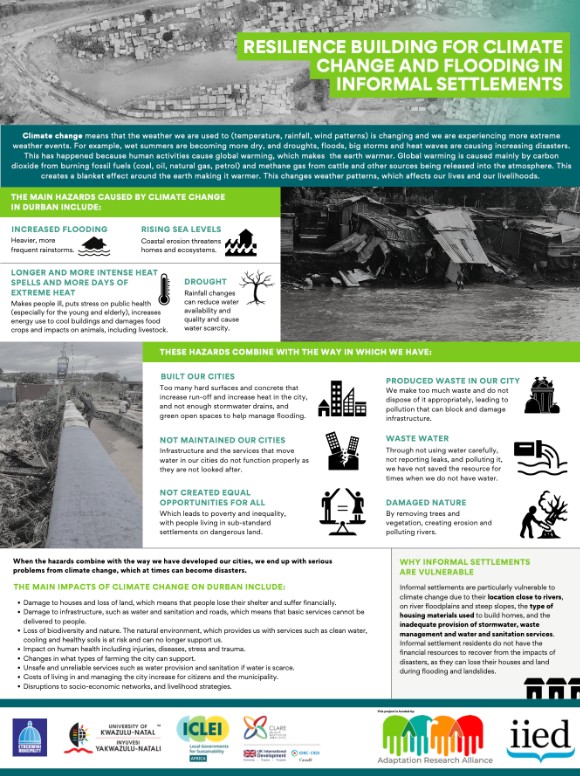
Download this informative poster on what to do before, during and after a flood in informal settlements.
CLARE is a flagship research programme on climate adaptation and resilience, funded mostly (about 90%) by UK Aid through the Foreign Commonwealth and Development Office (FCDO), and co-funded by the International Development Research Centre (IDRC), Canada. CLARE is bridging critical gaps between science and action by championing Southern leadership to enable socially inclusive and sustainable action to build resilience to climate change and natural hazards. The views expressed herein do not necessarily represent those of the UK government, IDRC or its Board of Governors. Learn more about CLARE: www.clareprogramme.org